Swapx is a Sonic DEX built around Algebra Finance V4 concentrated liquidity
In short: Decentralized exchange on Sonic for token swaps and liquidity provision, using Algebra Finance V4 to power concentrated liquidity pools.
Swapx is a decentralized exchange on the Sonic blockchain that uses Algebra Finance V4 to support concentrated liquidity, token swaps, automated liquidity management, and pool voting incentives. It gives traders a route for low-slippage swaps on Sonic while giving liquidity providers a way to place capital inside active price ranges, earn trading fees, and participate in pool-directed reward flows.
Trading on Sonic with concentrated liquidity
The core idea is simple: a swap routes through liquidity pools rather than a traditional order book. Tokens sit in smart contracts, and the pool price updates as trades move the balance between the paired assets. On Sonic, that design pairs with fast block confirmation and lower-cost transaction execution, which matters when a trader is moving between volatile assets or adjusting a position several times.
Concentrated liquidity changes the quality of that experience. In older constant-product AMMs, liquidity spreads across every possible price, including prices the market never reaches. Algebra Finance V4 lets liquidity sit inside chosen ranges, so more of the capital works near the current market price. When the pool is well funded around the active range, swaps clear with tighter execution and less price impact for the trade size.
What Algebra Finance V4 adds to the pool design
Algebra Finance V4 is the infrastructure layer behind the advanced pool mechanics. It brings concentrated liquidity, flexible fee logic, and tools for more efficient liquidity deployment. Swapx uses that stack so the exchange does not have to rely on flat, one-size-fits-all pools for every pair on Sonic.
The V4 model also fits automated liquidity management. A liquidity provider wants fees , but a tight range needs attention because market movement pushes positions out of the active zone. Automated management reduces that maintenance burden by helping capital stay aligned with current pool conditions. It does not remove market risk, but it makes advanced liquidity positions more approachable than manually rebuilding ranges after every price move.
How token swaps move through the exchange
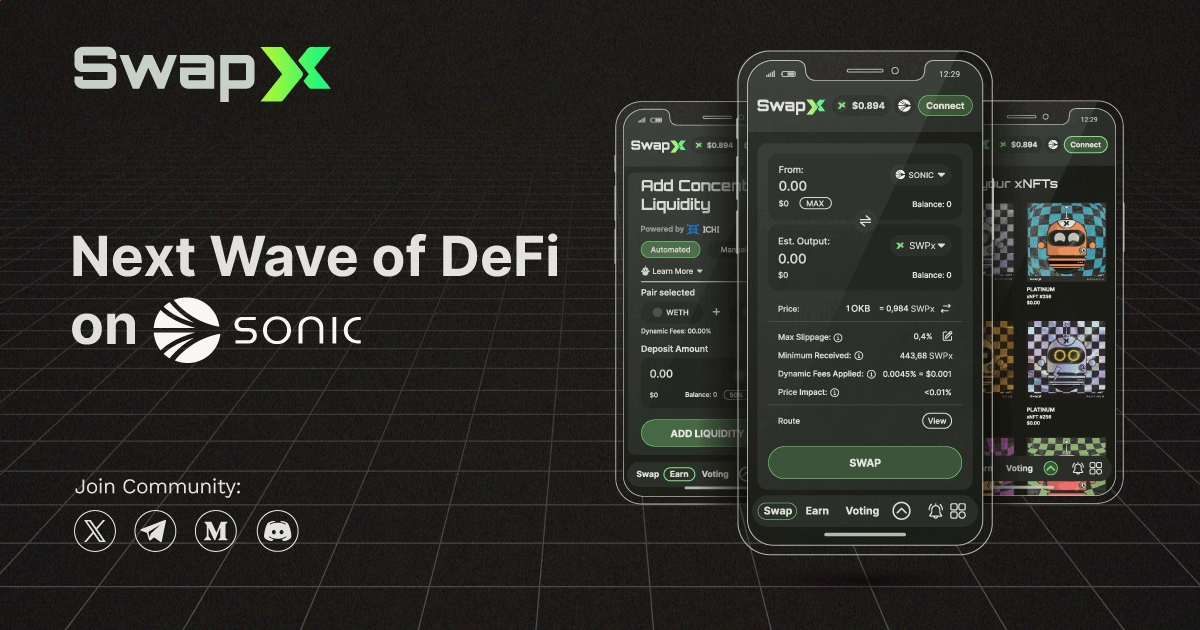
A trader starts by connecting a Sonic-compatible wallet, selecting the token being sold, and choosing the asset being received. The interface quotes the route, expected output, price impact, and transaction cost before the wallet prompts for approval or signature. The final settlement happens on-chain, so the wallet balance updates after the transaction confirms.
Approvals matter because ERC-20 style tokens require permission before a smart contract spends them. A first swap for a token pair includes an approval transaction, while later swaps use the existing allowance unless the user changes it. After approval, the actual swap calls the pool contract and returns the output token according to pool liquidity, slippage tolerance, and the price at execution.
Liquidity providers work with price ranges, not passive balances
Providing liquidity on Swapx means depositing two assets into a pool and deciding how that liquidity should serve trades. In a concentrated model, the position earns fees while the market price stays inside its selected range. A narrow range focuses more capital where trades happen and increases fee density, while a wider range stays active across more price movement and spreads capital thinner.
This turns liquidity provision into active position management. The provider chooses a pair, reviews current pool depth, considers volatility, and sets the range with an understanding that the deposited token mix changes as traders use the pool. If price moves through the range, the position becomes dominated by one side of the pair until the range is adjusted or the market returns.
Pool voting and reward direction on Sonic
The official description highlights that users get paid to vote for pools, which points to an incentive layer beyond ordinary swap fees. In this kind of DEX design, voting helps direct emissions or reward budgets toward selected pools. The pools that attract votes receive stronger incentives, which encourages liquidity to gather where the community, token projects, or active traders want deeper markets.
That mechanism gives liquidity a governance-shaped marketplace. Projects seek deeper pools for their tokens, liquidity providers look for fee and reward opportunities, and voters influence which pairs receive attention. Swapx fits the Sonic ecosystem because new chains need more than a swap button; they need a way to coordinate depth around the assets people actually trade.
Starting with a wallet, gas, and a small test trade
A first session begins with a wallet that supports Sonic and enough native gas token to pay for transactions. The user connects the wallet, confirms the network, then checks whether the desired token pair has enough depth for the intended trade. A small initial swap is a sensible way to confirm routing, token selection, and wallet behavior before sending a larger order.
Several details deserve attention before signing:
- Token contract identity, especially for newer assets with similar names.
- Quoted output and minimum received after slippage settings.
- Pool liquidity near the current price, not just the existence of a pair.
- Wallet approvals for tokens being sold or deposited.
- Gas balance for approvals, swaps, liquidity changes, and withdrawals.
Once the wallet shows the completed transaction, the new token balance appears in the wallet or portfolio view. If a token does not display automatically, adding its contract address to the wallet interface reveals the balance without changing the on-chain holding.
Where low slippage comes from
Low slippage is not a slogan; it comes from depth near the execution price. Concentrated liquidity improves that depth when providers place capital around the active trading band. A pool with strong liquidity near the current price absorbs a trade with less movement, while a thin pool moves sharply when a large order arrives.
Swapx benefits from the same reality as other AMMs: execution quality follows liquidity distribution. A deep pool for a popular Sonic asset pair delivers a cleaner quote than a newly created pool with little capital. Traders should read price impact and minimum output as core trade data, because those fields show how the pool will treat the specific transaction being signed.
Risks that matter for swaps and LP positions
Smart contract exposure, token volatility, and liquidity range selection are the main risks. A swap can execute at a worse output when the market moves before confirmation and the slippage limit allows it. A liquidity position earns fees, but the deposited assets rebalance as prices move, which creates impermanent loss relative to simply holding the two tokens outside the pool.
The most specific LP risk is going out of range. When that happens, the position stops earning trading fees until the price returns to the chosen band or the provider adjusts the range. Tight ranges offer more fee concentration while active, but they demand more monitoring in a fast market. Wider ranges reduce maintenance pressure and accept lower capital concentration.
Alternatives inside the wider DeFi stack
On-chain traders have several routes besides Swapx. Classic AMMs use simpler pools that spread liquidity across all prices. Aggregators search multiple venues for a stronger quote. Order-book exchanges suit traders who want limit orders and centralized liquidity. Bridges move assets between chains before a trade, adding more steps and cross-chain settlement risk.
The Sonic DEX route is most relevant when the assets, incentives, and liquidity already live on Sonic. It keeps the swap local to the chain and connects directly with concentrated pools and voting-directed rewards. A trader focused on another network will compare local DEX depth there; a Sonic participant will care more about pool quality, execution cost, and liquidity incentives in this ecosystem.
Why the exchange matters to the Sonic ecosystem
A chain needs reliable markets for its tokens before lending, derivatives, yield strategies, and treasury operations become useful at scale. Swapx provides part of that market layer by joining swap execution, liquidity placement, and pool incentives in one venue. That combination helps token projects seed trading pairs, gives users a direct path between assets, and gives LPs more control than broad-range passive pools.
Its differentiator is not merely that it is a DEX. The important feature is the Algebra Finance V4 foundation: concentrated liquidity with automation and incentive design for Sonic-native pools. When those pieces work together, trading becomes more efficient, liquidity becomes more intentional, and pool rewards become a tool for shaping where market depth forms.
What to know about Swapx
What wallet do I need for the Sonic DEX?
You need a wallet that supports the Sonic network and can sign smart contract transactions. The wallet must hold the token you want to trade and enough native gas token to pay for approvals, swaps, and liquidity actions. If the wallet does not show a received token automatically, adding the token contract to the wallet interface displays the existing on-chain balance.
Does using a concentrated liquidity pool require two tokens?
Providing liquidity normally requires depositing both assets in the selected pair, such as a Sonic ecosystem token and a stablecoin. The position then shifts between the two assets as the market price moves inside or outside the chosen range. Swapping is different: a trader sells one token and receives another, while the pool handles the paired liquidity behind the transaction.
Can I earn fees without voting for pools?
Liquidity providers earn trading fees when their position is active inside the pool's price range. Pool voting is a separate incentive layer that directs rewards toward selected pools. A user can focus on LP fees alone, but voting-linked rewards influence which pools attract deeper liquidity and stronger participation from token communities.
How long does a swap take on Sonic?
A swap settles after the wallet signs the transaction and the Sonic blockchain confirms it. The visible time depends on network conditions, wallet handling, and whether an approval is needed first. A first-time token trade usually takes two actions: one approval for token spending and one swap transaction. Later trades with the same allowance skip the approval step.
What happens if my liquidity range goes out of range?
When a concentrated liquidity position moves out of range, it stops earning trading fees until the market price returns to that range or the provider adjusts the position. The position also becomes weighted toward one token in the pair. Tight ranges increase fee density while active, but they require more attention than wider ranges in volatile markets.
Which costs show up before confirming a trade?
The interface should show the quoted output, price impact, slippage settings, and network gas cost before confirmation. Token approvals add a separate gas transaction when the smart contract has not been authorized to spend that token. The most important cost signals are minimum received and price impact, because they show the trade's execution quality against current pool liquidity.