Swapx fees is the cost structure behind swaps, liquidity ranges, and pool voting on SwapX
In short: Sonic DEX cost layer for token swaps and liquidity pools, shaped by concentrated liquidity and automated pool management.
Swapx fees is the combined cost a trader or liquidity provider meets when using SwapX on the Sonic blockchain: pool trading fees, price impact, routing slippage, gas paid on Sonic, and the opportunity costs tied to concentrated liquidity. SwapX integrates Algebra Finance V4, so costs are shaped by pool design, automated liquidity management, and the way liquidity sits around the active price range.
The fee line begins before the swap is confirmed
A swap quote on SwapX shows more than a simple exchange rate. The route passes through one or more liquidity pools, each with its own depth and active range. When the pool is deep near the current price, the quoted output stays close to the market rate. When liquidity is thin, the trade moves the pool price farther and the trader receives less of the destination token.
This is why Swapx fees matter most at the quote screen. The visible cost includes the protocol-level pool fee, yet the larger number for big trades is price impact. Sonic gas is another line item, paid to execute the transaction on-chain. A small swap in a deep pool feels inexpensive, while a large swap through a narrow range exposes the trade to higher execution cost.
Algebra Finance V4 changes how liquidity costs behave
SwapX uses Algebra Finance V4 as the concentrated liquidity layer for its automated market maker. Concentrated liquidity lets LPs place capital inside selected price ranges rather than spreading it evenly across every possible price. That structure gives active traders tighter pricing when liquidity is placed around the live market, because more token inventory is available where swaps actually occur.
The same design makes pool conditions more important. If the active price leaves a range, that LP position stops earning trading fees until the market returns or the position is adjusted. Automated liquidity management is meant to reduce that manual work by helping keep capital productive, but the economics still come from real swap volume, fee tiers, token volatility, and range placement.
What traders pay on Sonic swaps
A trader pays through four practical channels. The pool fee is taken by the liquidity pool as part of the swap. Price impact reflects how much the trade changes the pool price. Slippage tolerance defines the worst execution the wallet accepts before the transaction reverts. Network gas pays Sonic validators for including the transaction.
- Pool fee: the DEX charge embedded in the swap route.
- Price impact: the difference created by trade size against available liquidity.
- Slippage tolerance: the user-set execution boundary for volatile moments.
- Sonic gas: the on-chain transaction cost paid by the wallet.
- Route complexity: extra pools in a path add more places where costs accumulate.
Notably, Swapx fees are therefore clearest when read as a complete execution cost, not a single published percentage. A route with a lower pool fee still produces a worse deal when liquidity is shallow or the path crosses volatile assets. The best quote is the one that delivers the most output after all execution effects are included.
How LPs earn fees from concentrated pools
Liquidity providers deposit token pairs into pools and earn a share of swap fees when trades use their active liquidity. On a concentrated liquidity DEX, the important detail is the active range. Capital placed close to the current price earns during normal trading, while capital outside the active band sits idle for fee collection until price returns.
For LPs, Swapx fees act like revenue from market demand, not fixed interest. A busy pool with tight liquidity around the traded price generates fee flow, but token composition changes as traders buy one side and sell the other. LPs need to understand impermanent loss, because a position that earns fees still loses relative value when one asset strongly outperforms the other.
Pool voting adds another cost-and-reward layer
Typically, SwapX also highlights pool voting as part of its DeFi design. Voters direct attention toward selected pools and get paid for voting activity tied to pool incentives. That makes the fee story broader than a swap checkout screen: pools compete for liquidity, incentives influence where LPs deposit, and trading volume decides whether a pool has durable fee demand.
In most cases, Swapx fees connect to this voting layer because incentives change the real yield profile of a pool. A pool with attractive rewards but weak organic volume looks different from one with steady swaps and lower incentives. The stronger setup is the one where external rewards, pool fees, and token risk make sense together.
Choosing a pool without chasing the largest reward
The best pool choice starts with the pair itself. Pairs made of correlated assets expose LPs to less price divergence than volatile pairs, while newer tokens demand wider caution because a sharp move pushes concentrated positions out of range. Fee earnings need enough trading volume to justify the risk of holding both assets.
A useful review sequence is simple: compare recent volume, check the pool depth near the current price, review the token pair, look at incentive terms, then decide whether the position range matches the way the market moves. This keeps the focus on actual pool mechanics rather than a single advertised reward number.
Getting started with the fee view in a wallet
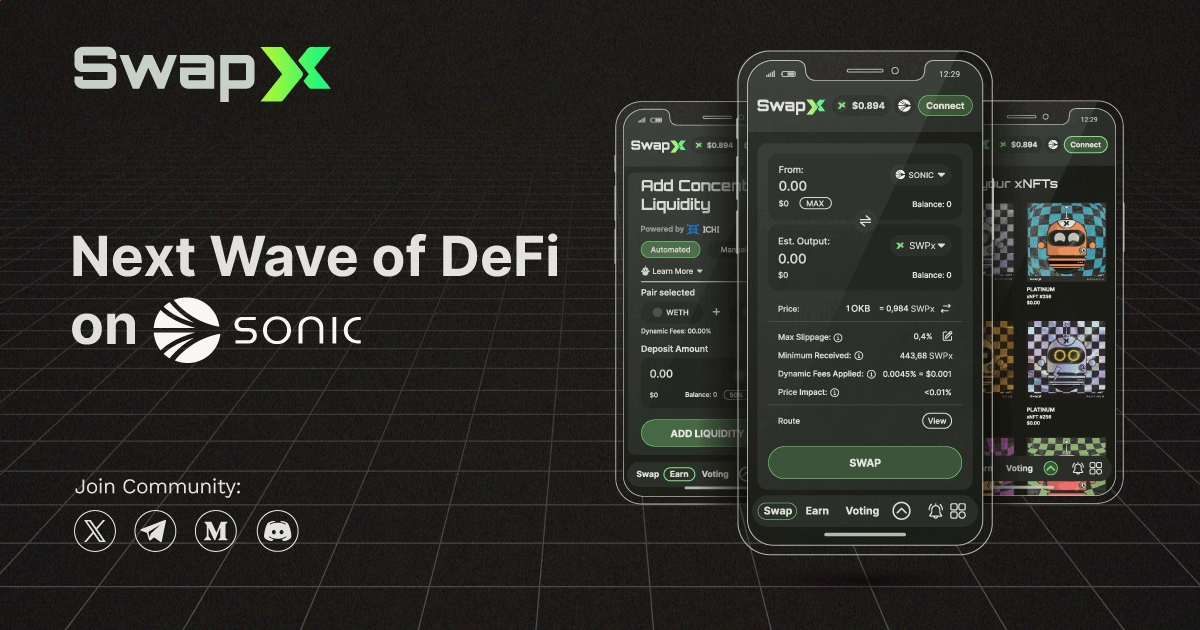
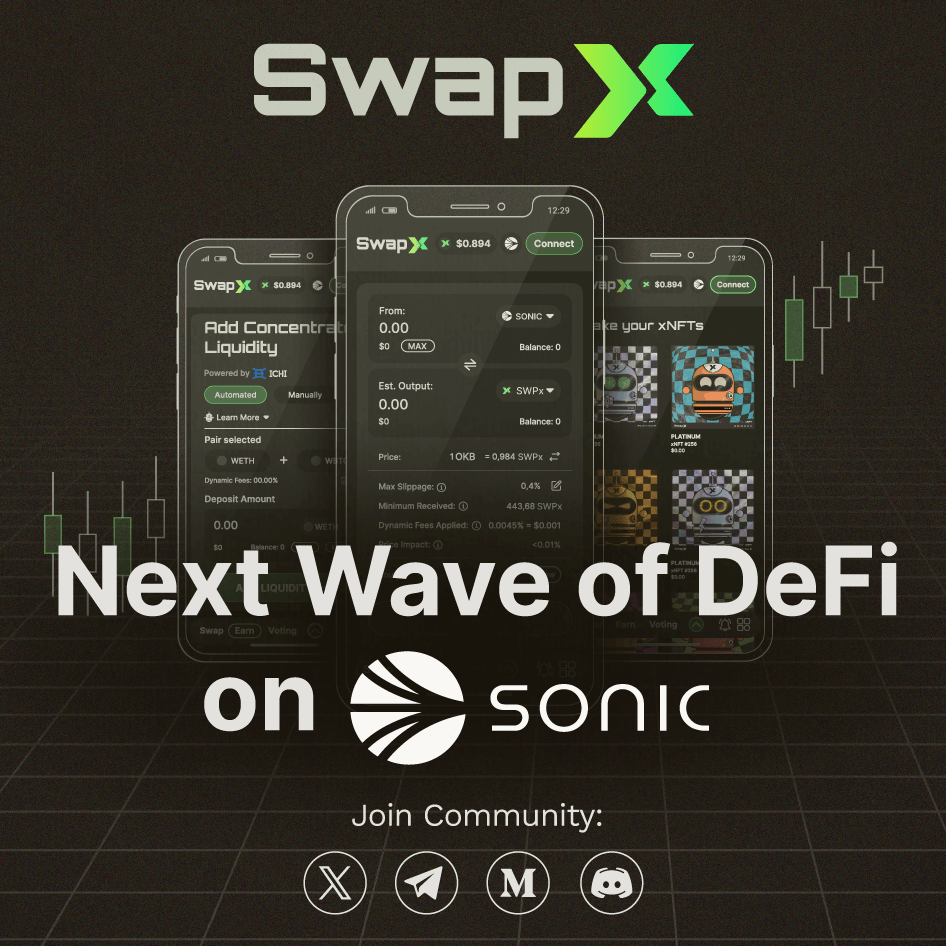
To make a swap, connect a Sonic-compatible wallet, choose the input and output tokens, and inspect the quote before signing. The quote should show the estimated output, minimum received, price impact, and network fee. A high price impact warning means the trade size is too large for the current pool depth or the route is not efficient enough.
New LPs should begin by observing pools before depositing. Watch how the active price moves through the range and how volume changes through the day. Once a position is opened, the wallet view matters as much as the deposit screen, because a concentrated position needs monitoring when price moves quickly.
Where SwapX differs from a constant-product AMM
A classic constant-product AMM spreads liquidity across the full price curve. That makes positions simple, but it leaves much of the capital far away from the traded price. SwapX, through Algebra Finance V4, brings liquidity closer to where trading occurs, which improves capital efficiency and reduces execution drag when pools are well supplied.
That efficiency comes with more position logic. A passive LP in a wide-range pool accepts lower capital concentration, while a narrow range increases fee exposure and requires closer management. Swapx fees become more dynamic under this model because the real cost is shaped by where liquidity is placed, not just by pool labels.
Risks that affect the final cost
Several risks change what a user ultimately pays or earns. Volatile tokens widen price impact during fast moves. Low-liquidity pools produce weaker quotes. Impermanent loss reduces LP returns when token prices diverge. Incentive-heavy pools expose users to reward token volatility and changing participation levels.
The most specific caution is approval hygiene: grant token approvals only for the transaction path you intend to use and review allowances after interacting with new tokens. That habit protects capital without changing the core fee math.
Alternatives inside the Sonic DeFi stack
Users comparing execution routes on Sonic look at other DEX interfaces, aggregators, and direct pool interactions. An aggregator searches across liquidity sources and returns a route, while SwapX gives direct access to its own pool system, liquidity positions, voting incentives, and automated management features. The better route is visible in the final token output and the transaction details shown before signing.
For context, Swapx fees are best understood as an on-chain cost model tied to active liquidity. Traders read them through quotes, price impact, and gas. LPs read them through fee share, range behavior, and pool incentives. Voters read them through the way rewards guide liquidity toward selected markets on Sonic.
Before you start with Swapx fees
What makes the trading cost on SwapX different from a flat exchange fee?
The trading cost combines the pool fee, price impact, slippage settings, and Sonic network gas. A flat fee explains only one part of the transaction. The actual outcome depends on how much active liquidity sits near the current price and whether the route crosses one pool or several pools before delivering the output token.
Does a low pool fee always mean the cheapest SwapX trade?
No. A low pool fee produces a poor trade when the pool has thin liquidity or the trade is large enough to move the price. The useful comparison is estimated output after all execution effects. A slightly higher pool fee in a deeper pool can deliver more of the token you are buying.
Can liquidity providers earn fees if their range is out of price?
A concentrated liquidity position earns swap fees only while its liquidity is active around the traded price. If the market moves outside the selected range, that position stops collecting new trading fees until price returns or the range is adjusted. The deposited assets still remain in the position, but fee flow pauses.
Which costs matter most for a small Sonic token swap?
For a small swap, Sonic gas and the pool fee are usually the easiest costs to see, while price impact stays modest in a deep pool. The quote still deserves a quick check because new or thinly traded tokens create poor execution even for moderate trade sizes. Minimum received is the key protection number before signing.
When should an LP use a wider range on SwapX?
A wider range fits a position that prioritizes staying active through bigger market moves. It spreads capital across more prices, so fee concentration is lower than a narrow range, but the position remains eligible to earn across a broader band. Volatile pairs and users who monitor less frequently are better suited to wider ranges.
Are pool voting rewards part of the same cost calculation?
Pool voting rewards are related to the economics, but they are not the fee charged on a swap. They influence where incentives flow, which affects liquidity depth and LP behavior. A pool with strong incentives attracts deposits, but the durable value still comes from trading volume, token quality, and the risk of holding the paired assets.